
Social Justice Calendar 2026-27
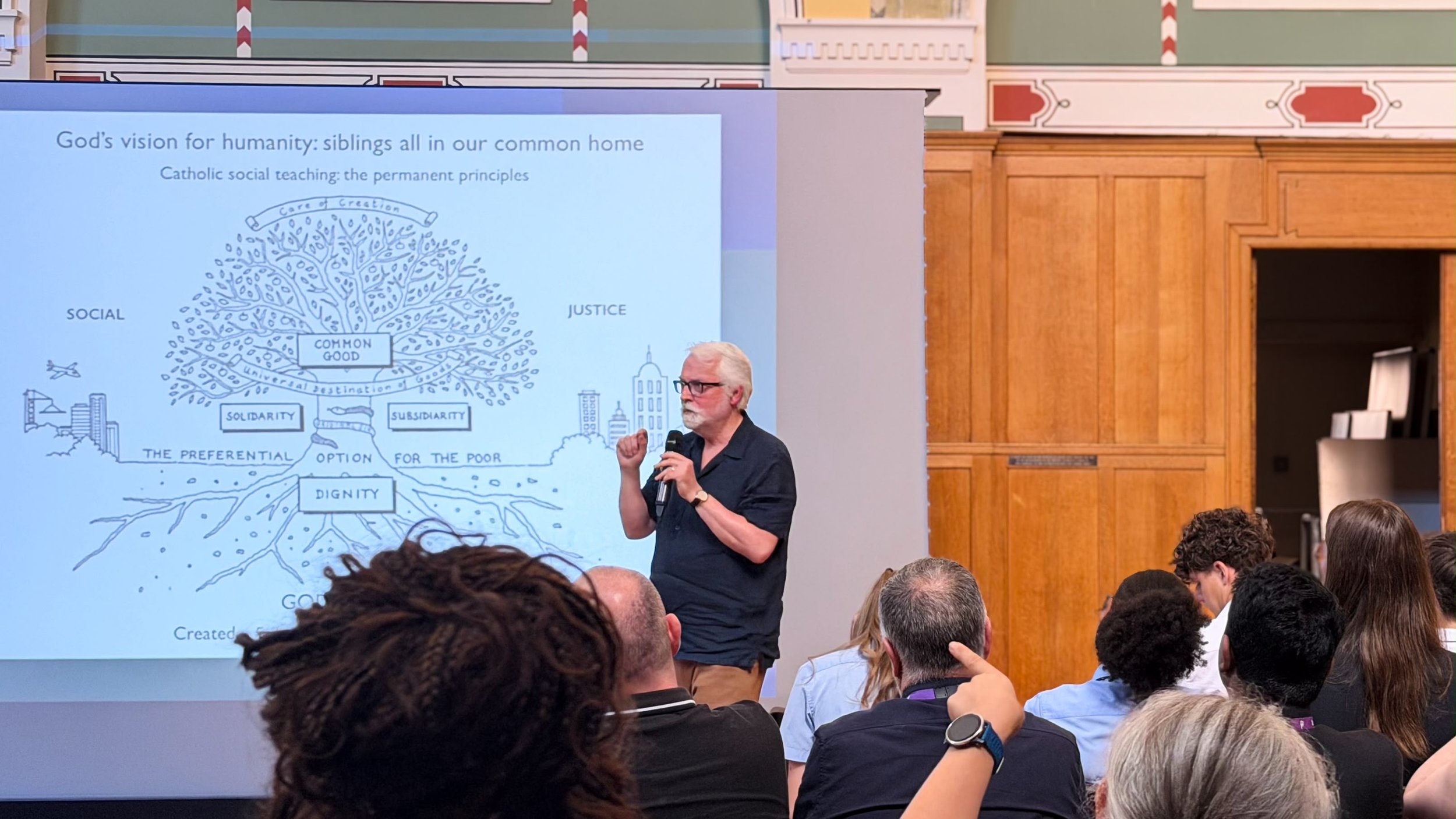
A good way to integrate the Social Doctrine of the Church (Catholic Social Teaching) into the life of the parish, school or chaplaincy, is to celebrate some of the exemplary witnesses in humanity’s long struggle for peace and justice, the key documents, liturgical feast days, or global observance days. Schools could make reference to these key dates in liturgies, assemblies, INSET days, fundraising or advocacy campaigns.
This calendar is not exhaustive. It does not feature every feast, or international day, just the ones I think have particular relevance for social justice. You might want to add your own dates from the charism of your school or parish community, or themes of particular resonance for you.
You will also find this calendar in instalments in the Pastoral Review, a quarterly periodical which a focus on ministry and leadership in the Church. To find out more, visit: https://www.thetablet.co.uk/pastoralreview/about
You’ll find all the papal social encyclicals referenced below at the Vatican website: www.vatican.va. If you enter an encyclical name into your search engines this website should come up as an option.
If you think I’ve missed an important date, or for any other feedback, you can contact me via my website.
The Year of St Francis
The special Jubilee Year of Saint Francis proclaimed by Pope Leo XIV runs from 10 January 2026 to 10 January 2027, on the occasion of the eighth centenary of the death of Saint Francis of Assisi. This is a wonderful opportunity to engage with this much-loved saint, described by Pope Francis as, “the example par excellence of care for the vulnerable and of an integral ecology lived out joyfully and authentically” (Laudato Si, 10). For more information on this special Jubilee Year, visit: https://www.vaticannews.va/en/vatican-city/news/2026-01/year-saint-francis-indulgence-assisi.html
1 September 2026
World Day of Prayer for the Care of Creation and the beginning of the Season of Creation, which ends on 4 October, the Feast of St Francis of Assisi, although this year it falls on a Sunday. Pope Leo XIV has chosen “They shall beat their swords into plowshares and their spears into pruning hooks” (Is 2:4) as the theme for 2026. For more information: https://www.vaticannews.va/en/vatican-city/news/2026-06/vatican-theme-2026-world-day-of-prayer-for-the-care-of-creation.html
5 September
Feast of Saint Teresa of Calcutta (Mother Teresa), one of the patron saints of Caritas Internationalis. Born in Albania in 1910, Mother Teresa founded the religious order the Missionaries of Charity which serves the poorest of the poor all over the world.
9 September
Feast of Blessed Frederic Ozanam (optional memorial), one of the founders of the St Vincent de Paul Society, in 1833, to serve the poor in Paris. Frederic was one of a group of young Catholic intellectuals, passionate about their faith and the service of charity. In his writings, we can see many of the themes that would become known as Catholic Social Teaching. He and his friends were inspired by the example of St Vincent de Paul, who died in 1660. His feast day, on 27 September, falls on a Sunday this year. The SVP, as it is affectionately known, has spread all over the world, working for justice and serving the poor and isolated. To find out more about their work in England and Wales, visit, https://svp.org.uk/about-us-; in Scotland: https://www.ssvpscotland.com/; in Ireland: https://www.svp.ie/
13 September
Education Day (Second Sunday in September). Education Sunday takes place each year on the second Sunday of September, and this year is observed on the 13th. Established by the Bishops in 1848, it is one of the oldest Days of Special Prayer in the liturgical calendar of England and Wales. The resources for this year can be found at: https://www.catholiceducation.org.uk/news/education-sunday-2026
14 September
Anniversary of the publication in 1981 of Laborem Exercens by St John Paul II. Why not have a look at the end of section 15 and the proposals that workers should have more ownership of their workplace.
20 September
Evangelii Gaudium Sunday (Third Sunday in September). Pope Francis called on the Church to embark on a fundamental change of direction when it comes to evangelisation, no longer relying on past structures and actions but to read the signs of the times and act passionately in proclaiming the unique message of the Gospel that brings joy to all people who receive it with an open heart. A good day to re-read Evangelii Gaudium, which Pope Leo XIV has confirmed is the ‘road map’ for his Magisterium.
27 September
World Day of Migrants and Refugees. “Even just one of these children” is the theme that Pope Leo XIV has chosen for the 112th WDMR, which will be marked on Sunday, 27 September 2026. The decision was announced by the Dicastery for Promoting Integral Human Development in the Vatican. The title is a reference to Matthew 18:5: “Whoever welcomes one such child in my name welcomes me." “With this choice, the Holy Father intends to express the Church’s concern for minors directly involved in migration, recalling the duty to welcome each one of them as the Gospel teaches us,” the statement said. For more on the origins of the day visit: https://www.vaticannews.va/en/pope/news/2026-04/world-day-migrants-refugees-title-children-2026-pope-leo-message.html
2 October
Harvest Fast Day. For more information, keep an eye on the CAFOD website: https://cafod.org.uk/fundraise/parishes/support-harvest-family-fast-day-in-your-parish
3 October
Anniversary of the publication in 2020 ofFratelli Tutti, by Pope Francis. A good day to re-visit some of the key message of this encyclical, perhaps in school assemblies or celebration of the word? There is so much to reflect on in this rich and inspiring encyclical, but why not have a look at paragraphs 215-221 on a new culture of dialogue and encounter?
4 October
The feast of St Francis of Assisi falls on the 27th Sunday in Ordinary Time this year, so will not be celebrated in the liturgy. Schools and parishes may wish to celebrate the life of St Francis at some point this week and mark the end of the Season of Creation.
11 October
Prisoners’ Sunday. On Prisoners’ Sunday, the Catholic Church encourages everyone to reflect on and pray for prisoners and their families. For information about Prisoners’ Sunday and PACT, the national Catholic charity prison charity, please visit: https://www.prisonadvice.org.uk/faith/events/prisoners-sunday/
You may also be interested in looking at the resources for Prisons Week (second week in October) from 11-17 October 2026, at: https://www.prisonsweek.org/
12-18 October
Challenge Poverty Week. Challenge Poverty Week England & Wales is an opportunity for us all to say what needs to change to enable our own communities to thrive. Many Christian organisations are Challenge Poverty Week partners. More information here: https://challengepoverty.co.uk/. Challenge Poverty Week in Scotland is from 5-11 October: https://www.povertyalliance.org/cpw/
12- 18 October
Anti-Slavery Week, 12-18 October. For more information on the extent of human trafficking and modern slavery, how to raise awareness and bring it to an end, visit: https://hopeforjustice.org/anti-slavery-day/
22 October
Feast of St John Paul II, who was pope from 1978 until his death in 2005. In that time, he brought the Gospel to some 130 countries on his travels abroad and produced a rich body of teaching, including some of the milestone encyclicals in Catholic Social Teaching (see: 14 September and 30 December).
3 November
The feast day of St Martin de Porres who, with St Oscar Romero and St Teresa of Calcutta, are the patron saints of Caritas Internationalis. Martin is regarded as the patron saint of social justice. To find out more about St Martin and Caritas, read: https://www.caritas.org/wordpress/wp-content/uploads/2019/04/ServingOutOfLove.pdf
8 November
Birthday of Dorothy Day in 1897 in New York, Catholic social activist and co-founder of the Catholic Worker Movement. For more information, visit: https://catholicworker.org/timeline-of-the-life-of-dorothy-day/.
11 November
Feast of St Martin of Tours, patron saint of chaplains. St Martin is perhaps best known for the story of cutting his military cloak in two to give half to a naked beggar. In a dream that same night, he saw Jesus dressed in the half of his cloak he had cut for the beggar. Jesus said, “Martin has covered me with his garment.”
13 November
Birthday of Cardinal Joseph Cardijn, who founded the Young Christian Workers and developed the See-Judge-Act method for evaluating social conditions in the light of the gospel and discerning how to bring about positive change. This method – also known as the “pastoral cycle” – found its way into Church teaching in the encyclical Mater et Magistra (1961) by St John XXIII (See: paragraph 236). To find out more about the history of Young Christian workers visit: https://www.ycwimpact.com/
15 November (33rd Sunday in Ordinary Time)
World Day of the Poor. This year marks the tenth World Day of the Poor, instituted by Pope Francis in 2016. In his message for the day, Pope Leo XIV said, “As I recalled in the Apostolic Exhortation Dilexi Te, “God shows a preference for the poor: the Lord’s words of hope and liberation are addressed first of all to them. Therefore, even in their poverty or weakness, no one should feel abandoned. And the Church, if she wants to be Christ’s Church, must be a Church of the Beatitudes, one that makes room for the little ones and walks poor with the poor, a place where the poor have a privileged place” (21). The full text of Pope Leo’s message can be found at: https://www.vatican.va/content/leo-xiv/en/messages/poor/documents/20260613-messaggio-giornata-poveri.html
22 November (Solemnity of Christ the King)
World Youth Sunday. World Youth Sunday is an international initiative celebrating the place of young people in the life and mission of the Church. In this Jubilee Year of St Francis, CYMFed will be celebrating the life and legacy of St Francis. Have a look at the resources from CYMFed to see how you can get involved: https://cymfed.org.uk/wys/
25 November
International Day for the Elimination of Violence Against Women. This UN day also marks the launch of the UNiTE campaign (Nov 25-Dec 10), an initiative of 16 days of activism concluding on International Human Rights Day on 10 December. This campaign, led by the UN Secretary-General and UN Women since 2008, aims to prevent and eliminate violence against women and girls around the world, calling for global action to increase awareness, promote advocacy and create opportunities for discussion on challenges and solutions. For more information: https://www.un.org/en/observances/ending-violence-against-women-day
29 November(First Sunday in Advent)
Advent 2026 is a time to prepare for the great celebration of the Incarnation, the birth of Jesus, the love of God made visible among us, on Christmas Day. The readings for the Sundays in Advent urge us to be alert to what is going on around us so we can read the signs of the breaking in of the Kingdom of God and repent, or change our lives in readiness for the invitation of the Gospel.
1 December
World AIDS Day, designated on 1 December every year since 1988, is an international day dedicated to raising awareness of the AIDS pandemic caused by the spread of HIV infection and mourning those who've died of the disease. World AIDS Day is one of the eleven official global public health campaigns marked by the World Health Organization (WHO), https://www.who.int/. For more information on AIDS prevention and support in the UK, visit: https://caps-uk.org/.
7 December
Anniversary of the promulgation by Pope Paul VI in 1965 of Gaudium et Spes, the document of Vatican II which is most concerned with social issues. This is the Magisterium (teaching) of the Church at its highest level (Compendium of the Social Doctrine of the Church, 96), hence it is the most significant document in Catholic Social Teaching. To recap on its teaching on the social order and the Gospel, why not have a look at paragraph 26. https://www.vatican.va/archive/hist_councils/ii_vatican_council/documents/vat-ii_const_19651207_gaudium-et-spes_en.html
10 December
Human Rights Day, anniversary of the proclamation by the United Nations General Assembly on 10 December 1948 of the Universal Declaration of Human Rights (UDHR), the first global declaration of human rights. For the full text of the Declaration: https://www.un.org/en/about-us/universal-declaration-of-human-rights
25 December
The Nativity of the Lord. The ultimate act of God’s solidarity with the human race. “And the Word became flesh and lived among us” (John 1:14).
25 December
Anniversary of the publication in 2005 of Deus Caritas Est, by Pope Benedict XVI. Why not have a look at paragraph 31.a which reflects on the importance of the formation of the heart.
30 December
Anniversary of the publication in 1987 of Sollicitudo Rei Socialis, by Pope John Paul II. Why not have a look at paragraphs 38-40 for an extended reflection on solidarity.
1 January 2027
Solemnity of Mary, Mother of God; World Day of Peace. An annual celebration by the Catholic Church, dedicated to universal peace, held on 1 January, the Solemnity of Mary, Mother of God. Pope Paul VI established it in 1967, being inspired by the encyclical Pacem in Terris of Pope John XXIII. Peace Sunday follows the international day and is celebrated in England and Wales on the 2nd Sunday in Ordinary Time, this year on 17 January. Pax Christi provides resources for parishes anhttps://cafod.org.uk/jubilee-schools/jubilee-pledge/jubilee-pledge-mapd families at: https://paxchristi.org.uk/
6 January
The solemnity of theEpiphany. In 2027, the Epiphany falls on a Wednesday, an ideal opportunity for the celebration of Mass in school and to reflect on the themes of gift and gratitude.
18 January
Martin Luther King Day, which falls on the third Monday of January, in honour of Dr King’s birthday on 15 January. Martin Luther King was the de facto leader of the civil rights movement in mid-20th century America. Inspired by his Christian faith, he was a prophetic witness to justice and nonviolence in the face of systemic racial discrimination. For more information: https://thekingcenter.org/
18-25 January
Octave of Prayer for Christian Unity. Division between Christians is still sadly the cause of violence and suspicion. We pray this week for unity among the followers of Christ. Visit the Churches Together in Britain and Ireland website for resources: https://ctbi.org.uk/
24 January
Racial Justice Sunday (three Sundays before 1st Sunday of Lent). For information and resources, check: https://www.cbcew.org.uk/
27 January
Feast of St Angela Merici, who founded the Company of St Ursula (the Ursulines) in Italy in 1535. At a time when one commentator described schools as “slaughterhouses” due to the extent of the use of corporal punishment, the schools founded by Angela’s religious order forbade all corporal punishment. She urged her sisters to be loving to the students, “Love all your daughters equally and do not show preferences for one more than another because they are all God’s children.” Today there are Ursuline schools all over the world.
27 January
Holocaust Memorial Day. We must never forget the horrors inflicted on the Jewish people and other minorities by the Nazi regime. We commit ourselves anew to stand against antisemitism and racial discrimination in all its insidious forms. For resources and information visit: https://www.hmd.org.uk/
30 January
The anniversary of the death of Venerable Mary Ward in England in 1645. Like St Angela Merici, Mary was dedicated to the education of girls in an age when education was mostly denied to them. Living at a time in England of great danger for Catholics, Mary persevered with her vision and on her return to London in 1637 opened free schools for poor girls. She founded the Congregation of Jesus and the Institute of the Blessed Virgin Mary in 1615, better known as the Loreto Sisters. Like the Ursulines, Mary Ward or Loreto schools can be found today all over the world.
4 February
International Day of Human Fraternity. In 2020, the United Nations declared 4 February as day to promote and celebrate greater cultural and religious tolerance. For more information visit: https://www.un.org/en/observances/human-fraternity
7 February
Day for the Unemployed (Sunday before 1st Sunday of Lent). This year it might be appropriate to focus on the number of young people in the UK not in employment, education or training. More than one million young people fall into this category of NEET. More information on this scandalous state of affairs can be found in the Milburn report: https://assets.publishing.service.gov.uk/media/6a3111dec39255c595b50928/Young_people_and_work_interim_report.pdf. There is an opportunity for parishes to consider what they might do to raise awareness of this issue, contact their MP to voice their concern and look into practical options to support young people.
8 February
Feast of St Josephine Bakhita. International Day of Prayer and Awareness Against Human Trafficking. Almost 50 million people are estimated to be in slavery today, more now than ever before. For more information and resources, visit the website of Bakhita House, a project of Caritas Westminster: https://www.caritaswestminster.org.uk/bakhita-house.php. For more information on the strategic approach to tackling human trafficking, visit the Santa Marta Group at: https://santamartagroup.org/
10 February
Ash Wednesday, the beginning of the season of Lent. During Lent we are called to deepen our relationship with God (prayer), our neighbour (almsgiving) and our common home (fasting). See: Liturgy Office for pastoral notes: https://www.liturgyoffice.org.uk/Calendar/Info/background1.shtml#Lent
11 February
Feast of Our Lady of Lourdes, World Day of the Sick. This day was introduced by Pope John Paul II as a reminder for the Catholic community to pray for the sick and their caregivers. It is an opportunity to raise awareness of health services and the extent to which they are accessible by all.
12 February
Red Hand Day, or the International Day against the Use of Child Soldiers. Every year since 2002, this day has raised awareness of the use of child soldiers and urged politicians to commit to ending the use of anybody under the age of eighteen in military organisations.https://www.redhandday.org/en/
19 February
Lent Fast Day (Friday 1st week of Lent).For more information visit: https://cafod.org.uk/education/for-teachers/key-dates-for-school-planning
20 February
World Day of Social Justice. In 2007, the United Nations declared that a day to promote and celebrate social justice globally would be held on this day. For details of the theme for the year, visit the UN website: https://www.un.org/en/observances/social-justice-day
5 March
The World Day of Prayer is a global ecumenical movement led by Christian women who welcome you to join in prayer and action for peace and justice. More information can be found at: https://worlddayofprayer.net/index.html#/
6 March
Flame 2027. Flame is the Largest Catholic event in the UK for young people, hosted at OVO Arena Wembley. Flame Congress 2027 is on Saturday 6th March. To find out more about Flame and the organisers, The Catholic Youth Ministry Federation, and to book tickets (CYMFed), visit: https://cymfed.org.uk/
22 March
World Water Day. An annual United Nations observance day since 1993 to celebrate water and raise awareness of the two billion people in the world without access to safe water. See UN website for more details: https://www.unwater.org/our-work/world-water-day
24 March
Feast of St Oscar Romero, one of the patron saints of Caritas Internationalis and patron saint of Caritas Social Action Network. Oscar Romero, the Archbishop of San Salvador, was assassinated while saying Mass on this day in 1980. He was a prophetic voice for justice and human dignity in El Salvador during the years of the military dictatorship. He embodies the preferential option for the poor. For more information and a bank of resources visit: http://www.romerotrust.org.uk/
26 March
Anniversary of the publication in 1967 ofPopulorum Progressio(“On the Development of Peoples”) by Pope Paul VI. A good day to re-visit this ground-breaking document in the school or parish and discuss some of its key passages. Why not try paragraph 21 on truly human conditions, or have a look at the radical vision for the common good in paragraph 24? You’ll find the text on the Vatican website: https://www.vatican.va/content/paul-vi/en/encyclicals/documents/hf_p-vi_enc_26031967_populorum.html
28 March
Easter Sunday the celebration of the Lord’s resurrection from the dead. In the Gospel reading from John, Mary Magdalene comes to the tomb on the first day of the week while it was still dark, heralding the new creation, which is made all the clearer when the Risen Lord breathes his Spirit into the disciples in the Upper Room and “a people of missionary disciples is born” (Synod, Final Document, #140)
7 April
Feast of St Jean Baptiste de le Salle, declared by Pope Pius XII in 1950 as the “Heavenly patron of all educators”, founder of all the Lasallian schools worldwide. Lasallian education centres on Catholic values and personal relationships, emphasising academic excellence, faith formation, inclusion, respect for the individual, service and social justice. https://www.lasalleigbm.org/
11 April
Anniversary of the publication in 1963 of the social encyclical, Pacem in Terris, by Pope John XXIII. Why not have a look at paragraphs 11-33 which outline the rights and duties of the human person?
21 April
The second anniversary of the death of Pope Francis, a good moment in school to commemorate his witness and teaching, especially his significant contribution to Catholic Social Teaching in Laudato Si and Fratelli Tutti.
23 April
Feast of St George, patron saint of England. This would be a good day to explore the history of England as a place which has welcomed the stranger and refugees throughout its long history. In an age when some are seeking to build walls, not bridges, today is an opportunity to celebrate a vision of England as an inclusive, welcoming and tolerant country.
1 May
Feast of St Joseph the Worker. St Joseph has two feast days. On 19 March we celebrate St Joseph, the husband of Mary. On 1 May we celebrate St Joseph the Worker. Joseph, the father of Jesus, was a carpenter. We can only imagine the skills and values Jesus learned working with his father. This is a good day to highlight the dignity of workers and look more closely into the Living Wage campaign, the only UK wage rate based on living costs: https://www.livingwage.org.uk/
1 May
Anniversary of the publication in 1991 of the social encyclical Centesimus Annus, by Pope John Paul II. Why not have a look at paragraph 36 which reflects on the important distinction in the consumer age between ‘having’ and ‘being’.
9 May
Birthday of Peter Maurin in 1877, co-founder of the Catholic Worker Movement. Biography can be found here: https://catholicworker.org/pm-biography-html/. Maurin was also known for his Easy Essays, his vision of a Christian social order written in short accessible free verse poems. To see some of them visit: https://catholicworker.org/easy-essays-html/
15 May
2026 marks the 135th anniversary of the publication in 1891 of the first of the Catholic Social Teaching encyclicals in the modern era, Rerum Novarum, by Pope Leo XIII (why not have a look at paragraph 3 to recall the powerful prophetic voice of this encyclical). On 15 May 2026, Pope Leo XIV signed into Church teaching his first encyclical, Magnifica Humanitas. The first two chapters of Pope Leo’s encyclical are a masterclass on the social doctrine of the Church (Catholic Social Teaching) and would be an ideal way to introduce this rich body of teaching to parishes and schools.
21 May
Feast Day of Blessed Franz Jagerstatter. Born in St Radegund, Austria in 1907. Executed on 9th August 1943 at Brandenburg Prison for his conscientious objection to serving in Hitler’s army. On 26 October 2007, Franz was Beatified in his home Diocese of Linz in Austria. For more information on this courageous witness to peace, visit: https://paxchristi.org.uk/resources/peace-people-2/blessed-franz-jagerstatter/
22 May
Feast of St Rita (d. 1457) who was married at a young age despite her desire to be a nun. Her husband was ill-tempered and dissolute. He was killed by his enemies and Rita was eventually allowed to enter a convent where she remained until her death. At her canonization in 1900, she was bestowed the title, “Patroness of Impossible Causes”, while in many Catholic countries she came to be known as the patron saint of abused wives. Today is a good opportunity to explore the Church’s work to support victims of domestic abuse, such as the work of Safe in Faith, part of Caritas Westminster: https://caritaswestminster.org.uk/safe-in-faith/
24 May
Anniversary of the publication in 2015 of Laudato Si’ by Pope Francis. A good day to look again at some key passages in this ground-breaking encyclical. Why not have a look at paragraphs 222-227 on Joy and Peace and the Christian spirituality of integral ecology.
29 May
Feast day of St Pope Paul VI, the pope who saw the Second Vatican Council to a conclusion and produced some of the key social encyclicals of the 20th century.
31 May
Feast of the Visitation of the Blessed Virgin Mary. A good day to read St Luke’s account (1; 39-56) of Mary’s visit to her relative Elizabeth, who was also pregnant by a miracle of God. Mary’s Song of Praise, the Magnificat, is a prophetic vison of the reversal of the world’s values, when the powerful are brought down and the lowly lifted up.
14-20 June
Learning Disability Week. Each year in the third week of June is Learning Disability Week. The purpose is to make sure the world hears what life is like when you have a learning disability. To find out more about the theme for 2027, visit: https://www.mencap.org.uk/learningdisabilityweek
14-20 June
Refugee Week, a UK-wide festival to celebrate the contributions, creativity and resilience of refugees and people seeking sanctuary. The theme for 2027 will be announced around October/November 2026, with more details at: https://refugeeweek.org.uk/about/
20 June
World Refugee Day. International day organised by the United Nations to celebrate and honour refugees around the world; established in 2001, in recognition of the 50th anniversary of the 1951 Convention Relating to the Status of Refugees, of which the UK was a founding signatory. https://www.unhcr.org/uk/get-involved/take-action/world-refugee-day
20 June
Day for Life. In England and Wales, Day for Life is celebrated on the third Sunday of June each year. In 2027, this falls on 20 June. Day for Life is marked on the same day by the three Bishops’ Conferences of England and Wales, Scotland, and Ireland. For more information, visit: https://www.cbcew.org.uk/day-for-life
22 June
Feast day of Saints Thomas More and John Fisher, martyrs of the faith executed during the persecution of the Catholic Church in England in the 16th century. A good opportunity to reflect on conscience and taking a stand against injustice in the ruling authorities of the country. Because it is the law does not necessarily mean it is morally acceptable.
29 June
Anniversary of the publication in 2009 of Caritas in Veritate, by Pope Benedict XVI. So much to reflect on in this long and powerful encyclical following the financial crash of 2008. Why not have a look at paragraph 45 on the need for a people-centred, ethical economics.
11 July
Sea Sunday (Second Sunday in July). Every year churches around the world celebrate Sea Sunday. It is a day for people to come together to pray for seafarers and fishers, and thank them for the vital role they play in all of our lives. For resources and more information, visit the website of Stella Maris at: https://www.stellamaris.org.uk/seasunday/
15 July
Birthday of Cardinal Manning in 1808. Cardinal Manning was a key figure in the resolution of the London dock strike in 1889. Around 130,000 dockers went on strike for more reliable pay and better conditions. Find out more about Cardinal Manning and the London dock strike of 1889 in this article by Jenny Sinclair, the founding director of Together for the Common Good: https://togetherforthecommongood.co.uk/from-jenny-sinclair/to-live-a-decent-life-2
25 July
World day for Grandparents and the Elderly. In 2021, Pope Francis instituted a Church-wide celebration of a World Day for Grandparents and the Elderly, to be held on the fourth Sunday of July, close to the liturgical memorial of Saints Joachim and Anne, the grandparents of Jesus. This day helps us to remember that the elderly are a gift and we have a duty to ensure that they are looked after well in their final years. A message from Pope Leo XIV for the day will be published here: https://www.vatican.va/content/leo-xiv/en/messages/grandparents.index.html
31 July
Feast of St Ignatius of Loyola. Ignatius founded the Society of Jesus (the Jesuits) which in recent years has been closely associated with the preferential option for the poor. One of their ‘works’, the Jesuit Refugee Service, is dedicated to serving, accompanying and advocating on behalf of refugees. For more information visit: https://www.jrsuk.net/
1 August
Feast of St Alphonsus Mary de Liguori. In the 18th century, St Alphonsus founded the Redemptorist Order, with a charism for preaching clearly, with particular solidarity with the poor by promoting their rights to justice and freedom. For more information: https://www.redemptorists.co.uk/who-we-are/our-founder-st-alphonsus.html
8 August
Feast of St Dominic, the founder of the Order of Preachers, known also as the Dominicans. St Dominic lived at the end of the twelfth and beginning of the thirteenth century. He was ordained a priest as a young man and soon found his mission in preaching against the Albigensian heresy which was widespread in his day. He was known for his humility, patience, asceticism, and prayerfulness, with a particular devotion to the rosary.
9 August
Feast of St Teresa Benedicta of the Cross (Edith Stein). Edith was a brilliant philosopher who stopped believing in God when she was 14, but she was so captivated by reading the autobiography of Teresa of Avila that she began a spiritual journey that led to her baptism in 1922. Twelve years later she imitated Saint Teresa by becoming a Carmelite, taking the name Teresa Benedicta of the Cross. After living for four years in the Cologne Carmel, Sister Teresa Benedicta moved to the Carmelite monastery in Echt, Netherlands, in 1938. The Nazis occupied that country in 1940. In retaliation for being denounced by the Dutch bishops, the Nazis arrested all Dutch Jews who had become Christians. Teresa Benedicta and her sister Rosa, also a Catholic, died in a gas chamber in Auschwitz on August 9, 1942.
14 August
Feast day of St Maximilian Kolbe, a Polish Franciscan friar who spoke out against the Nazi regime, was arrested and sent to Auschwitz concentration camp. In an act of ultimate solidarity, he offered to take the place of one of the ten men, who was married with a child, who had been selected to die by starvation in retribution for the escape of some prisoners. He led the condemned men in their starvation cell in prayers until the end.
30 August
Sanits Margaret Clitherow, Anne Line and Margaret Ward. These three women saints were martyred for their faith in England in the late 16th and very early 17th century. They held firm to their Catholic faith, often sheltering priests and supporting others in their faith. They are examples of great courage in the face of religious persecution.