
Drawing New Maps of Hope: ten takeaways
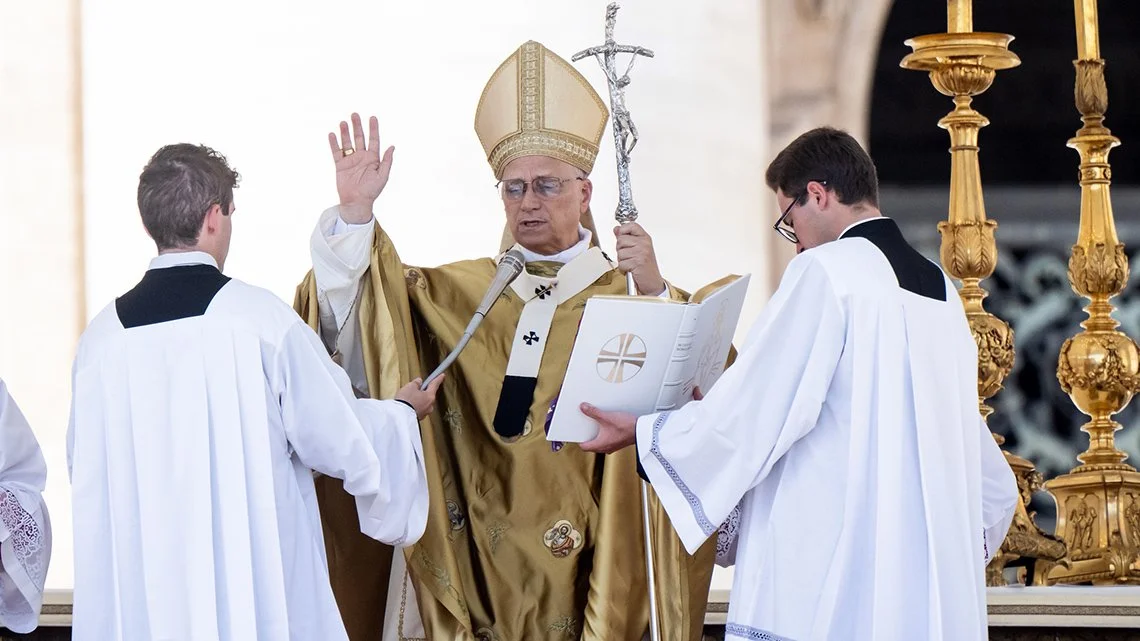
Photo credit: Mazur/CBCEW
On 27 October, Pope Leo XIV issued “Drawing New Maps of Hope”, an apostolic letter on Catholic education to mark the 60th anniversary of Vatican II’s Declaration on Christian Education, Gravissimum Educationis. It’s a rich document and as the most recent papal document on Catholic education, deserves our full attention and study.
I’ve chosen ten ‘takeaways’ from the document, sections that struck me because of their power and clarity. I hope they help to inspire and energise everybody in Catholic education at a time when societal and political challenges are pressing in. This is when we need to take the time to re-visit and renew our mission.
1. Build bridges, not walls
“Where educational communities allow themselves to be guided by the word of Christ, they do not retreat, but relaunch themselves; they do not erect walls, but build bridges. They react with creativity, opening up new possibilities for the transmission of knowledge and meaning in schools…” (1.1)
2. Literacy and numeracy are dignity
“In seventeenth-century Rome, Saint Jospeh Calasanz opened free schools for the poor, realising that literacy and numeracy are dignity, even before competence.” (2.3)
3. Questions are not silenced
“Catholic schools and universities are places where questions are not silenced, and doubt not banished but supported. Heart, there, dialogues with heart, and the method is one of listening, which recognises the other as a good, not a threat.” (3.1)
4. The measure of value: dignity, not efficiency
“Education does not measure its value only on the axis of efficiency: it measures it on dignity, on justice, on the ability to serve the common good.” (4.2)
5. An apprenticeship in virtue
“Education is not just the transmission of content, but an apprenticeship in virtue. It forms citizens capable of serving and believers capable of witnessing.” (5.1)
6. Social and environmental justice
“Catholic education cannot remain silent: it must unite social and environmental justice, promote moderation and sustainable lifestyles, and form consciences capable of choosing not only what is convenient but also what is right. Every small gesture – avoiding waste, choosing responsibly, defending the common good – is cultural and moral literacy.” (7.2)
7. An education of head, heart and hands
“Ecological responsibility is not limited to technical data.. What is needed is an education that involves the mind, the heart and the hands: new habits, community styles, virtuous practices.” (7.3)
8. The north star of the Global Compact on Education
“Among the stars that guide our journey is the Global Compact on Education. I gratefully embrace the prophetic legacy entrusted to us by Pope Francis. It is an invitation to form alliances and networks to educate for universal brotherhood. Its seven paths remain our foundation.” (10.1)
9. Pope Leo’s three priorities
“To the seven ways I add three priorities. The first concerns the interior life: young people demand depth; they need spaces for silence, discernment and dialogue with their conscience and God. The second concerns human digitalization: we educate in the wise use of technology and AI, putting the person before the algorithm. The third concerns disarming and disarming peace: we educate in nonviolent languages, reconciliation, bridges, not walls; ‘Blessed are the peacemakers’ (Mt 5:9) becomes the method and content of learning.” (10.3)
10. Educational mobility and social justice
“The Catholic educational network…is a constellation that reached every continent, with a particular presence in low-income areas: a concrete promise of educational mobility and social justice. This constellation demands quality and courage: quality in pedagogical planning, in teacher training, in governance; courage in guaranteeing access to the poorest, in supporting vulnerable families….” (10.4)
The Global Compact on Education, referred to by Pope Leo XIV, is not widely known in England and Wales. You can find out more about it here: https://www.educationglobalcompact.org/resources/Risorse/vademecum-english.pdf
Suggestions for reflection and discussion for pupils, school leaders, staff groups, governing bodies and trustees:
Which of the ten takeaways strike you most powerfully, and why?
Which of the ten do we want to open up and explore in more depth and detail? What does it mean for us?
Which of the ten do we seem most distant from at the moment and what do we want to do about that
For further reflection, read the entire document. Are there any takeaways for you not featured here?
You’ll find the document in full at: https://www.vatican.va/content/leo-xiv/en/apost_letters/documents/20251027-disegnare-nuove-mappe.html